
Named as a Creditor in a Chapter 11 Case? Don’t Skip the Proof of Claim.
If you’ve been listed as a creditor in a Chapter 11 bankruptcy case, it’s easy to assume your claim is already protected. After all, the debtor acknowledged you, right?
A judgment is only as good as its enforceability. In North Carolina, once a creditor obtains a final judgment against a debtor, one of the key tools available to enforce that judgment is the writ of execution.
Domesticating a Foreign Judgment in North Carolina By Caitlin S. TrueloveAttorney at Law Domestication is the legal process by which a judgment from one state (or “foreign” court) is recognized and enforced in another state. Under the Full Faith and Credit Clause of the U.S. Constitution, North Carolina courts are generally required to honor judgments from courts in other U.S. …
Vann Attorneys is hosting an essential webinar focused on Promissory Notes, Payment Schedules, and Confessions of Judgment: How to Plan for Optimal Payment from Your Customer. This webinar is designed to help businesses structure more effective credit arrangements and reduce risk when extending terms to customers.
We hosted a practical webinar on how to improve your accounts receivable process and strengthen your business cash flow. With economic uncertainty and rising payment delays, it was critical for business owners and leaders to understand how to reduce aging receivables, enforce payment terms, and get paid faster.
When it comes to debt collection, a judgment lien can be a powerful tool for creditors. A judgment lien is created via a judgment against a defendant. This judgment lien allows a creditor to secure an interest in a debtor’s property. In North Carolina, this judgment lien gives the creditor the right to collect the debt by seizing and/or selling the debtor’s property, assets, and bank accounts if the debt remains unpaid.
Join Vann Attorneys for an insightful webinar on the Enforcement of Foreign Judgments. This session will be hosted by attorneys James Vann and Ian Richardson, who will provide a comprehensive overview of what foreign judgments are and the processes involved in enforcing them.
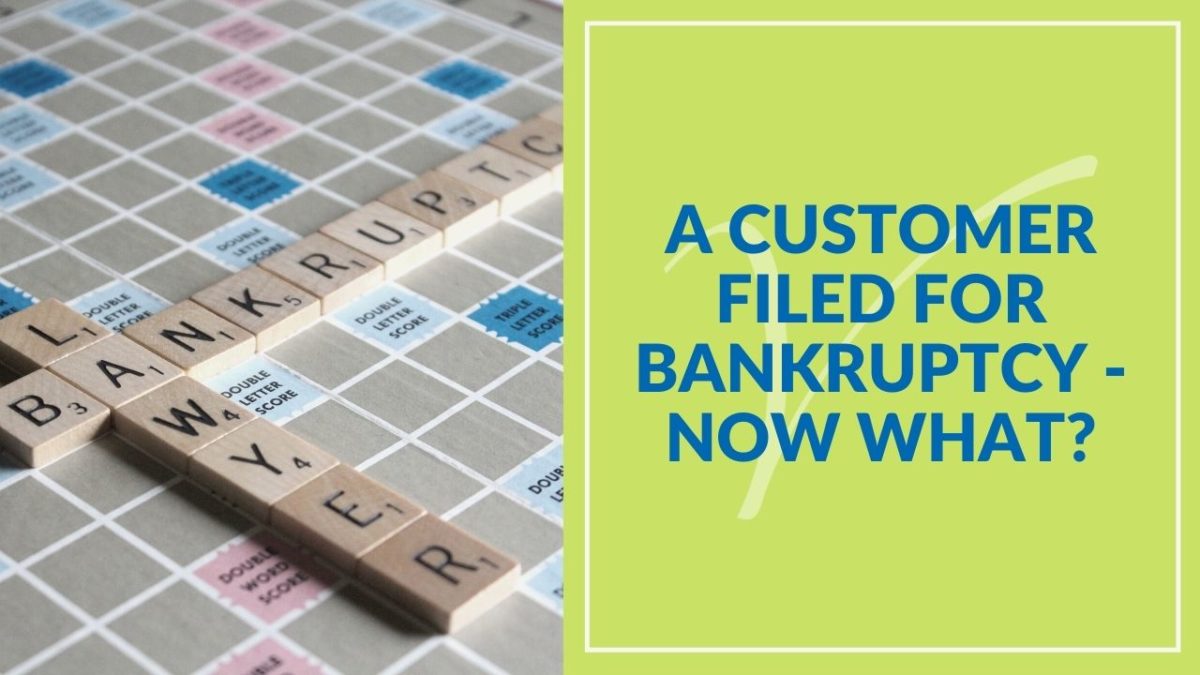
How should you respond when a customer files bankruptcy? How will the bankruptcy impact your accounts receivable? We will discuss the intricate workings of the Automatic Stay, delve into the essentials of Claim Preparation, and dissect the nuances of Preference Claims. Attorney James Vann will discuss the following topics:
We assist people with the post-judgment collection process on a judgment that was rendered by another state. We do this by domesticating that out of state judgment in the State of North Carolina. Some reasons to consider domesticating a judgment in the State of North Carolina include that the judgment debtor(s) reside or are located in North Carolina, and/or the judgment debtor(s) owns property in North Carolina. This process is typically straightforward and relatively routine. Once this process is complete, North Carolina recognizes that judgment as if it were rendered in this state. This means the creditor may use any means allowed by North Carolina statutes to pursue judgment debtor(s) in post-judgment collections. However, if a significant amount of time has passed since the judgment was issued, the creditor’s ability to enforce its judgment may be affected.
We will discuss how to protect your business cash flow, accounts receivable and contracts during a tightening economy. We will look at options and suggestions for businesses as the economy appears to be getting tighter with cash flow and bank lending. We will review what you need to look for as cash flow tightens with your customer.
Will the 2023 economy make your commercial collection efforts more difficult? What legal tips are available to help your organization’s accounts receivables? We discussed current economic commercial trends and how they are impacting accounts receivables. James Vann also discussed tips for collecting in light of the 2023 economy.
Does your organization struggle with collecting commercial past due accounts? Has the changing economy made your collection efforts more difficult? As interest rates go up and the market becomes increasingly volatile, tried and true techniques in collecting commercial accounts are vital. Attorney James Vann discussed methods, tips and suggestions to strengthen your collection efforts. We also shared proven techniques and tips from experienced credit professionals.
As a business creditor, how do you protect yourself for re-payment? What protections are allowed? Can you charge finance charges, when and how much? What documents help you the most? We looked at a variety of situations for best practices and protection.
We will discuss many topics regarding when to hire an attorney to collect from your customer. When should you hire an attorney fro a breach for nonpayment? What services should you request? What options do you have? What about arbitration/mediation clauses? what amount should be at issue to justify hiring an attorney? What type of attorney should you look for? We’ll discuss these topics and more during this fast-paced webinar.
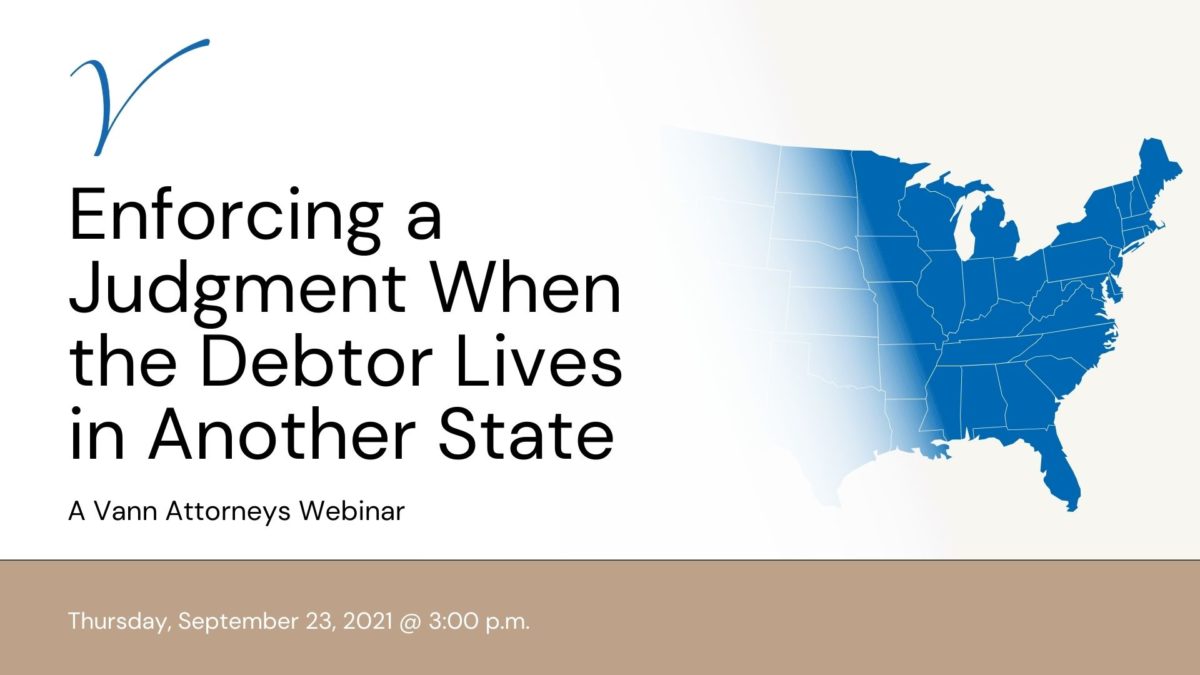
We will discuss how to proceed with collecting a judgment when the debtor lives in another state. We will look at transferring the judgment to another state and what is required to enforce the judgment. We will look at the Uniform Enforcement of Foreign Judgments Act and its provisions to enforce a judgment.
Once a lawsuit is over and judgment has been entered, North Carolina law requires a creditor to take additional steps to begin the process of attempting to collect the judgment. Knowing how to navigate the particulars of this process can improve a creditor’s chances of recovering money from the judgment debtor.
A dispute that often arises in litigation seeking to recover money pursuant to a promissory note is whether the statute of limitations has expired. The reason that disputes tend to arise in this area is that it is somewhat of a complex analysis which is impacted by multiple factors. The North Carolina Court of Appeals just addressed an issue of first impression with regard to the statute of limitations as applied to promissory notes. This issue is: whether the statute of limitations on a promissory note begins to run on the date the note is signed or the date appearing on the face of the note?
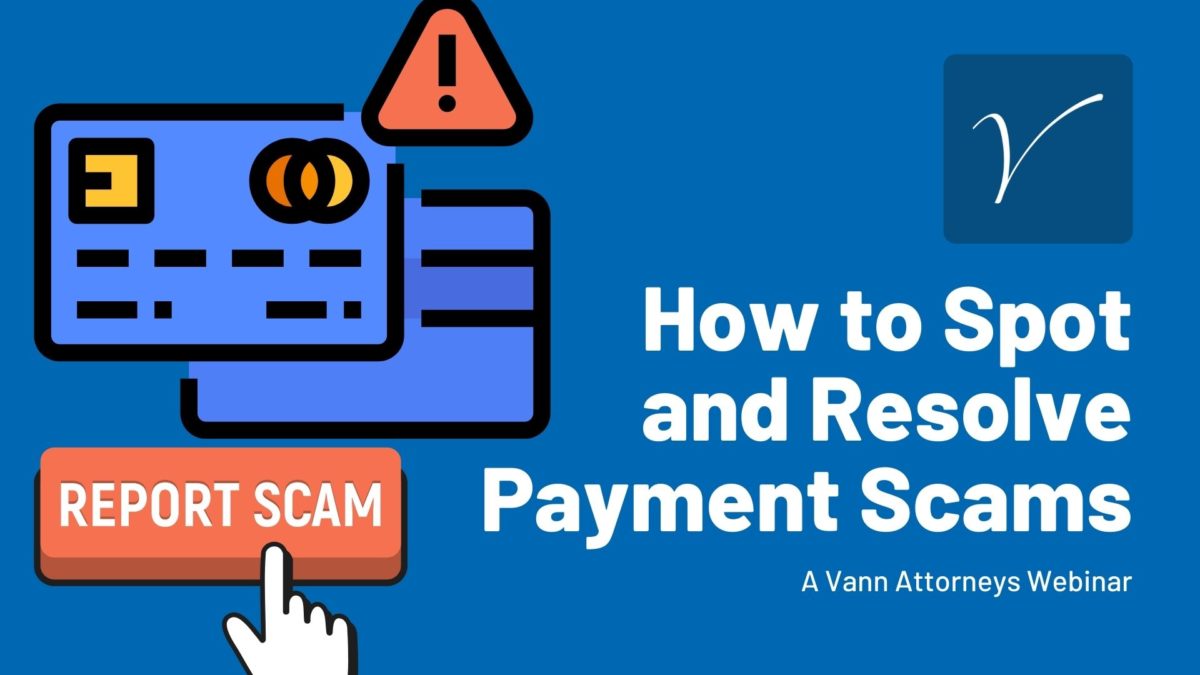
Payment scams are on the rise. Customers are trying to order and pay for goods and materials by phone using credit cards, debit cards and other forms of payment. How do you spot fraudulent transactions? How do you resolve the potential fraud?
Taking a security interest in a debtor’s collateral is a way to keep pressure on the debtor to make consistent, timely payments. A security interest is simply a lien on assets given to secure an obligation. The power of a creditor’s interest is in the creditor’s ability to enforce the interest by repossessing the collateral upon default.
We discussed the formation of business contracts, how to increase profitability for the company, key terms and conditions for businesses today and how to protect yourself in a fast paced economy. We discussed these topics and more during this fast-paced webinar.